A land developer website has two jobs: sell lots to builders and sell the community to the people who will live in it. Most developer sites I see do neither well. They have a rendering, an amenity list and a contact form, and nothing that tells a builder which lots are open or tells a family what they can build and when. A live lot map, honest community pages, a builder program page, the right documents and smart forms fix that.
Who is the site for, builders or buyers?
Both, and they want different things. A builder wants lot inventory, pricing, takedown terms and how to get on your approved list. A buyer wants to know what the neighborhood will feel like, which builders work there, what the HOA costs and how far it is to school and work.
Build the navigation around that split. Give builders one clear path and buyers another, so neither has to wade through the other's content. If you also sell lots straight to people building custom homes, treat them as buyers who need builder level detail.
What belongs on the lot map?
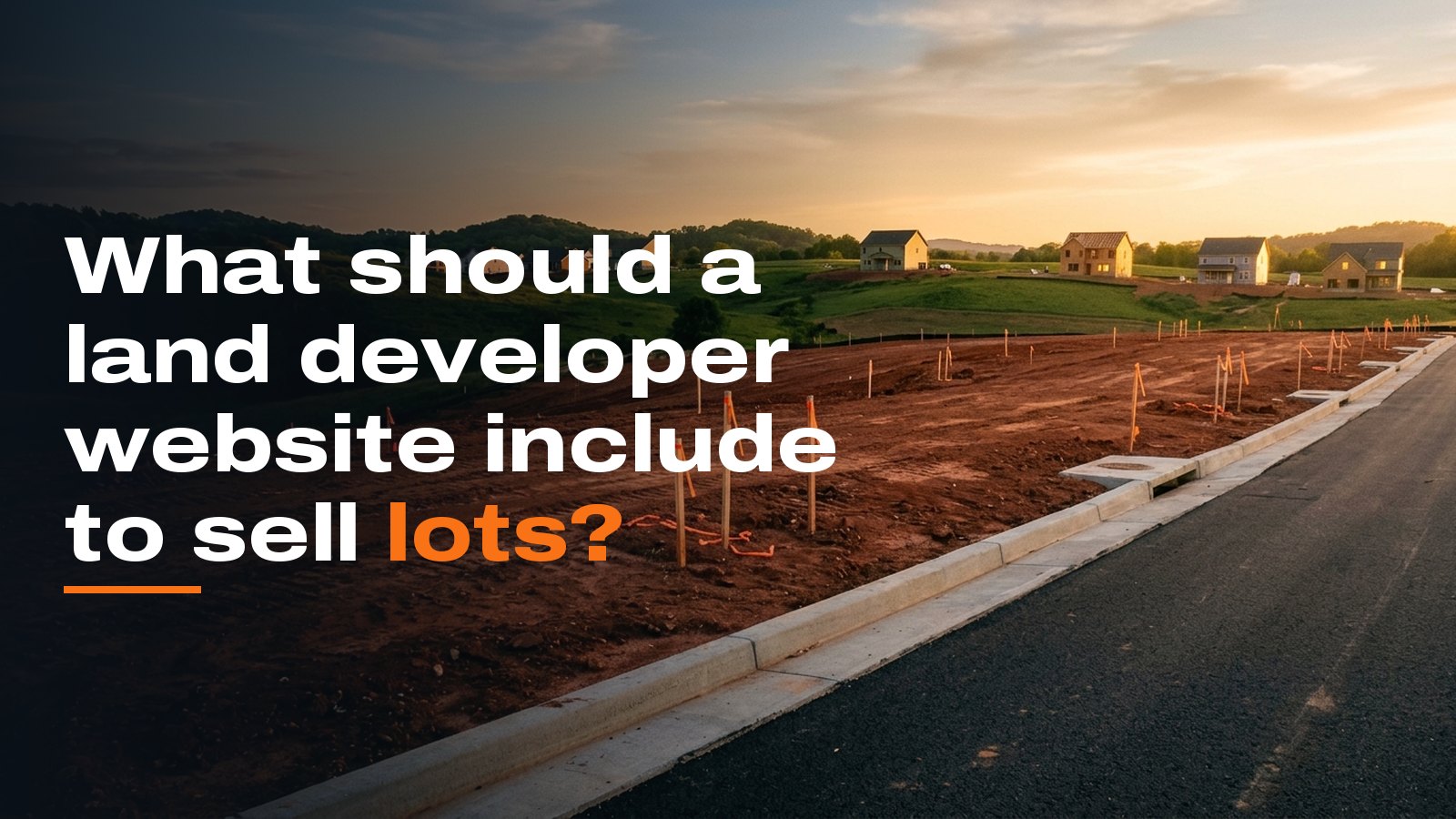
The lot map is the page that gets used most and the one most often left out of date. It should be your plat drawn as clickable lots, each colored by status: available, under contract, sold or future phase. Click a lot and its details open.
- Lot number, phase and section
- Acreage, frontage and depth
- Price, or a starting range if you negotiate with builders
- Topography notes, such as level or walkout
- Setbacks and easements
- Utilities: sewer or septic, water, gas, electric
- Which builders can build there, if you restrict by section
- Status and the date it last changed
A lot map that shows a sold lot as available costs you more trust than having no map at all.
Your team has to be able to update the map in minutes, ideally from the same spreadsheet or system you already use to track contracts. If changing a lot status means emailing your agency and waiting a week, the map will be wrong within a month. We have watched that happen after more than one launch.
What does a builder need to see before calling you?
Builders shopping for lots are comparing you against other developments, and they do it fast. A builder program page should cover your pricing structure, takedown schedule, deposit requirements, architectural review process and who to call. You do not have to publish every term. You do have to say enough that a builder knows whether a meeting is worth it.
Put the plat, covenants and architectural guidelines on that page as downloadable PDFs. Builders ask for them on the first call anyway. I would leave the plat open to everyone and put a short form in front of the full builder packet so you capture the lead.
What do buyers need on the community page?
Give each community its own page, and make it answer the questions your sales agents hear every week. Show where it is, with drive times to the places people commute. List the builders working there with links to their available homes, plus HOA dues, what they cover and school zoning.
Be honest about phases. Label rendered amenities as planned and show photos of what is finished. Buyers who drive out expecting a pool and find a graded pad do not come back.
Renderings sell the first phase. Real photos of finished streets and occupied homes sell every phase after that.
Put the community name, city and county in the page title and headings. People search the community name after they pass your entrance sign, and your page should be the first result, not a builder listing or a stale real estate portal.
What does a site like this cost?
In my experience, a developer site with an interactive lot map, several communities and builder content typically runs $30,000 or more to build. A single community with a static site plan image can fit in the $8,000 to $25,000 range a solid builder site usually costs. Hosting, maintenance and updates typically run $150 to $500 a month. Those are typical ranges, not a quote, and scope sets the number.
The map is where most of the money goes, and it is where I would spend first.
Start with an accurate lot map, then build one page for builders and one page for each community. Everything else on a developer site exists to support those three.