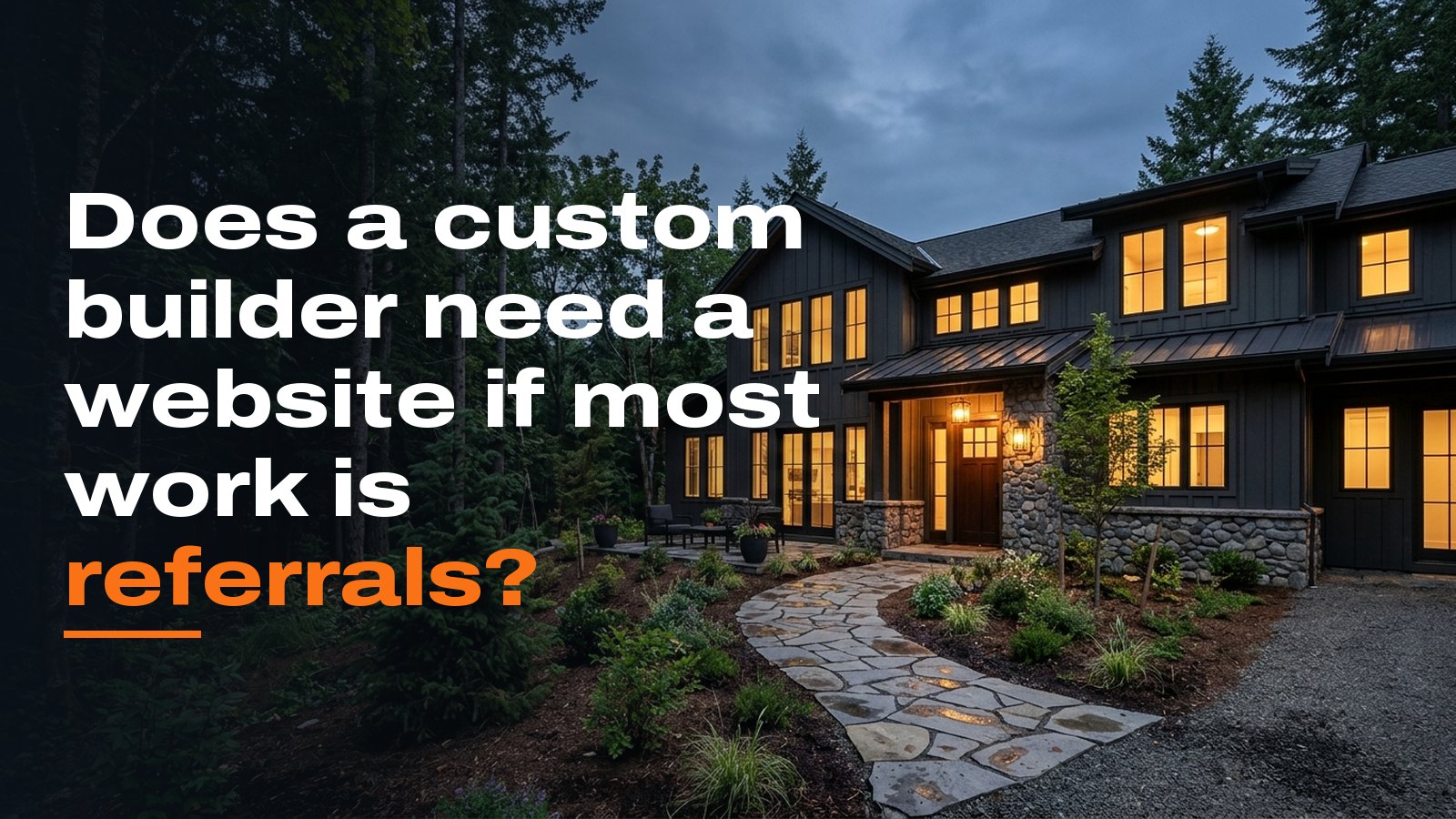
Yes, because referrals do not arrive as signed contracts. They arrive as a name passed along at a dinner party or on a job site, and the person who hears it types that name into Google before they ever dial. A referral builder's website is not there to find strangers. It finishes the sale your past client started.
What does a referred client do before they call?
They search your company name, usually on a phone, often with a spouse looking over their shoulder. They want to see homes like the one they have in mind, get a feel for how you work, and find some signal of what you cost. If they land on a Facebook page last updated two years ago, they do not tell you they are passing. They call the other builder their neighbor mentioned.
I have watched this happen to builders who swore they did not need a site. Their referral volume looked steady, so nobody noticed the couples who searched, found nothing convincing, and moved on. Nobody calls to tell you about a job you lost.
A referral gets you searched. Your website decides whether it gets you called.
The search step now includes AI tools. Plenty of buyers ask ChatGPT or Gemini whether a builder is any good, and those tools answer from your website, your reviews and your Google Business Profile. If there is little to pull from, the answer comes back vague or names someone else.
What does a referral builder's site need?
Less than most agencies will tell you. This site is a confirmation tool, so the effort goes into proof and clarity, not page count.
- A portfolio of finished homes with professional photography and a short note on each: the town or community, the size, and what the client asked for.
- A how we build page that walks from first meeting to move in, including selections, the draw schedule, change orders and the punch list.
- A starting price. A plain "most of our homes start around" line, in your own real numbers.
- Reviews and client stories in the clients' own words, with their permission.
- An about page with your face and your team's faces.
- A short contact form asking name, phone, email, whether they own a lot, timeline and budget range.
The starting price is where builders push back hardest. I get it, every custom home is different. But a referred buyer who cannot find any number assumes you are out of reach or are hiding something, and either way they hesitate. A starting range also filters out people who were never going to build with you, which saves you a wasted first meeting.
The process page matters more than builders expect. Custom clients are nervous about the year ahead, and showing them how draws and change orders work tells them you have done this many times.
How much should a referral builder spend?
In my experience, a solid home builder website typically costs $8,000 to $25,000 to build, and a template site can come in under $5,000. Sites with lot maps, inventory feeds and multiple communities often run $30,000 or more, which a custom builder working mostly from referrals rarely needs. Hosting, maintenance and updates typically run $150 to $500 a month. Those are typical ranges, not a quote, and scope sets the number.
If budget is tight, spend on photography before design. A clean template with great photos of your finished homes will outperform an expensive custom design full of phone pictures taken at the punch walk.
Spend on photography before you spend on design.
Do you need SEO if you are not chasing strangers?
Not the broad kind. You do not need a monthly retainer for blog posts targeting statewide keywords when your schedule is already full. That money is better spent photographing your next finished home.
You do need three things. Your site should come up first when someone searches your company name. Your Google Business Profile should be complete, with current photos and recent reviews. And your site should name the towns and communities you build in, so the occasional buyer searching "custom home builder" plus their town can find you too. For the builders we work with in Middle Tennessee, that small setup handles referral searches and picks up a few new leads on the side.
If most of your work comes from referrals, build a site that confirms the referral: finished homes, your process, a starting price and an easy way to call. Keep it current, and you stop losing the jobs you never knew were on the table.